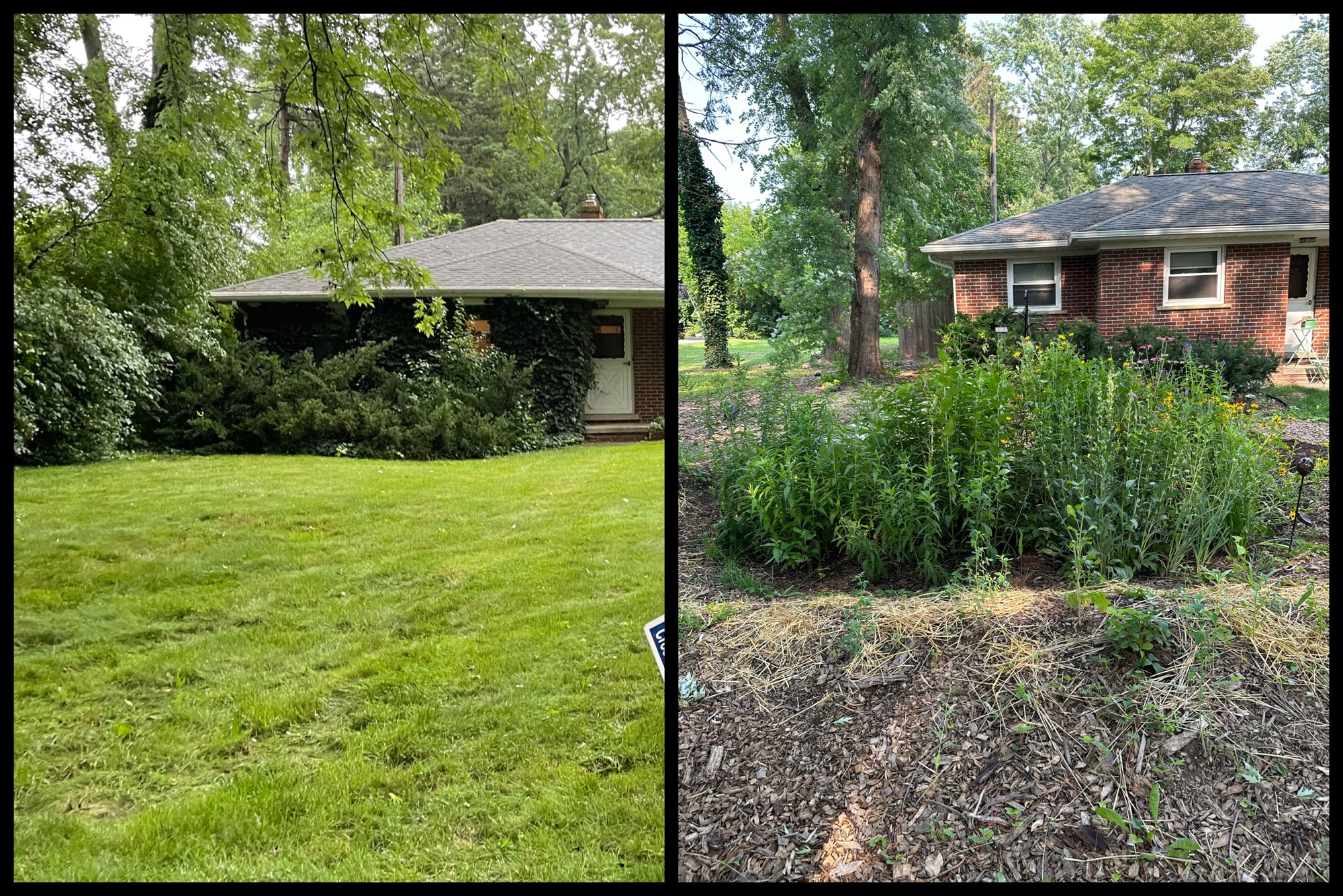
Aside from the silver maples, the plant that defined the house I bought was English ivy. English ivy was eating my new home. It crawled through windows, over doors, and into brick. It climbed up trees and advanced across grass. It swallowed up light and space. From the front curb to the rear fence, the north side of my property was a 15-foot wide forest of invasive plants, with English ivy rising from the ground in mats, suffocating trees, and generally taking over.

I assume Betty (my gardening predecessor) planted the English ivy as an ornamental ground cover, as so many Americans do. I even considered the ivy attractive upon first impression. Who wouldn’t welcome the charm of trailing ivy on an old brick building, like an English country house or a prestigious university? Looking back on this naive attitude, I remind myself that I had no knowledge of invasive plants, landscaping practices, or gardening principles when I moved in.
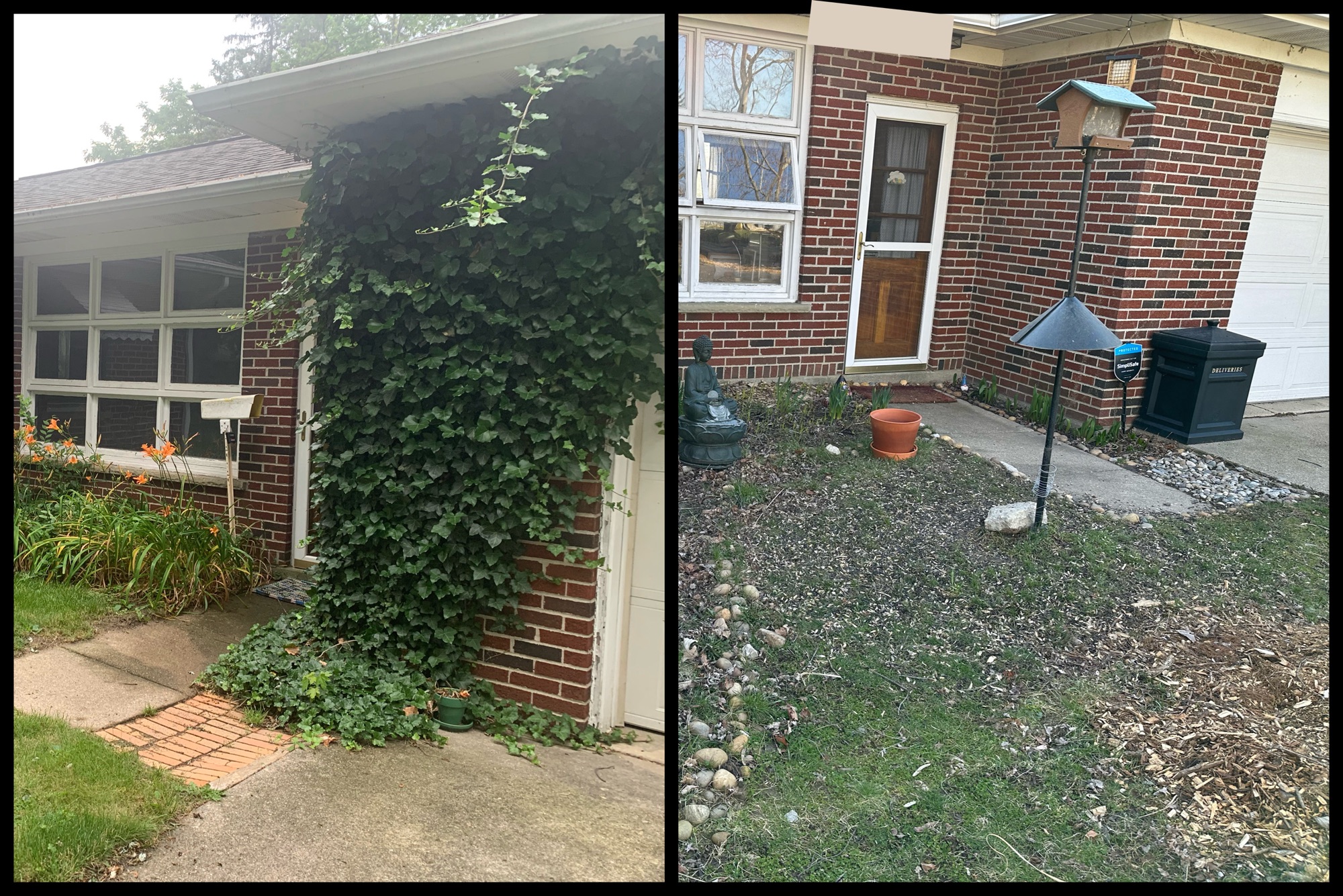
The basement of my house had major flooding issues, which I learned prior to purchase (thankfully). Experts told me that the plants around my house were likely contributing to the water problem. I began a multi-pronged approach to water mitigation, which included expensive foundation repair and gutter replacement, removal of invasive plants, and incorporation of native plants. The English ivy was first on the chopping block.
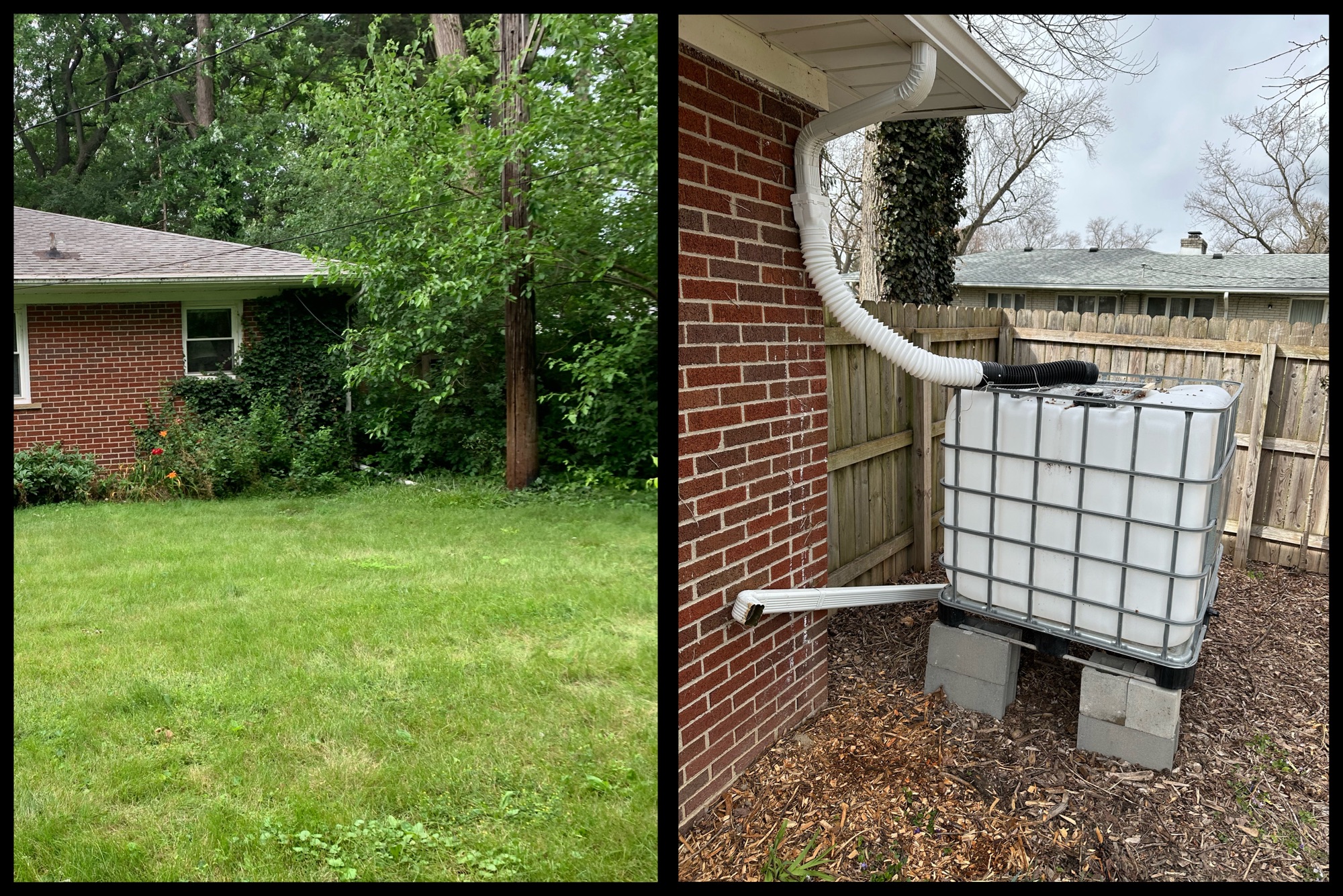
Now I can use rainfall to water plants, instead of mopping it up from my basement.
I was slightly hesitant to pull up the English ivy because I was afraid of what was living in it. Anything could be hidden in the deep layers of ivy–snakes, spiders, yellow jackets, or other creepy crawlies. Turns out, there was nothing to fear. Throughout the removal process, I saw nothing. Not a single creature emerged from the thicket, which further illustrates how useless this plant is. Native plants support wildlife by providing food, habitat, and protection. The wildlife in my yard ignored this exotic ivy because it provided none of those benefits. Truly, English ivy is worse than useless; it actively causes harm to the environment and surrounding structures and returns no benefit to nature.
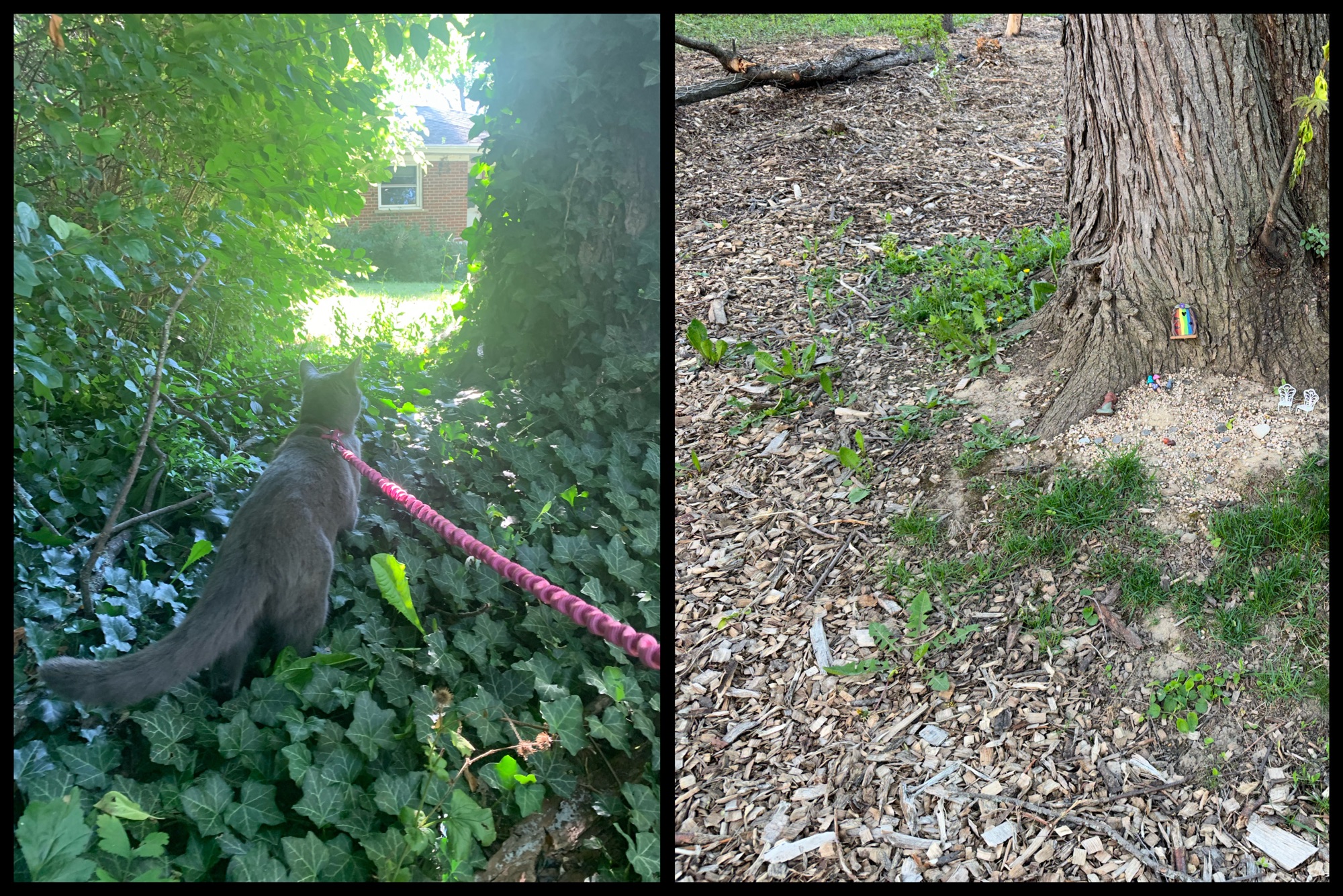
How did I remove the ivy? Good old fashioned elbow grease. Hours spent tugging and pulling and snipping and piling. Some vines surrendered peacefully, gliding through my hands like sharp scissors through wrapping paper. Other vines would resist with a sudden jolt, leaving the muscles in my torso strained for weeks. I find this kind of manual labor satisfying. I love to see the changes in the landscape and know they came about by my hand.

Initially I figured I could dispose of the vines in my compost bin. This was a bad idea, as English ivy does not give up so easily. It rooted within the compost, and I had to pull the vines a second time—out of the other compost material. Changing course, I filled dozens of yard waste bags and let the municipal compost deal with them.
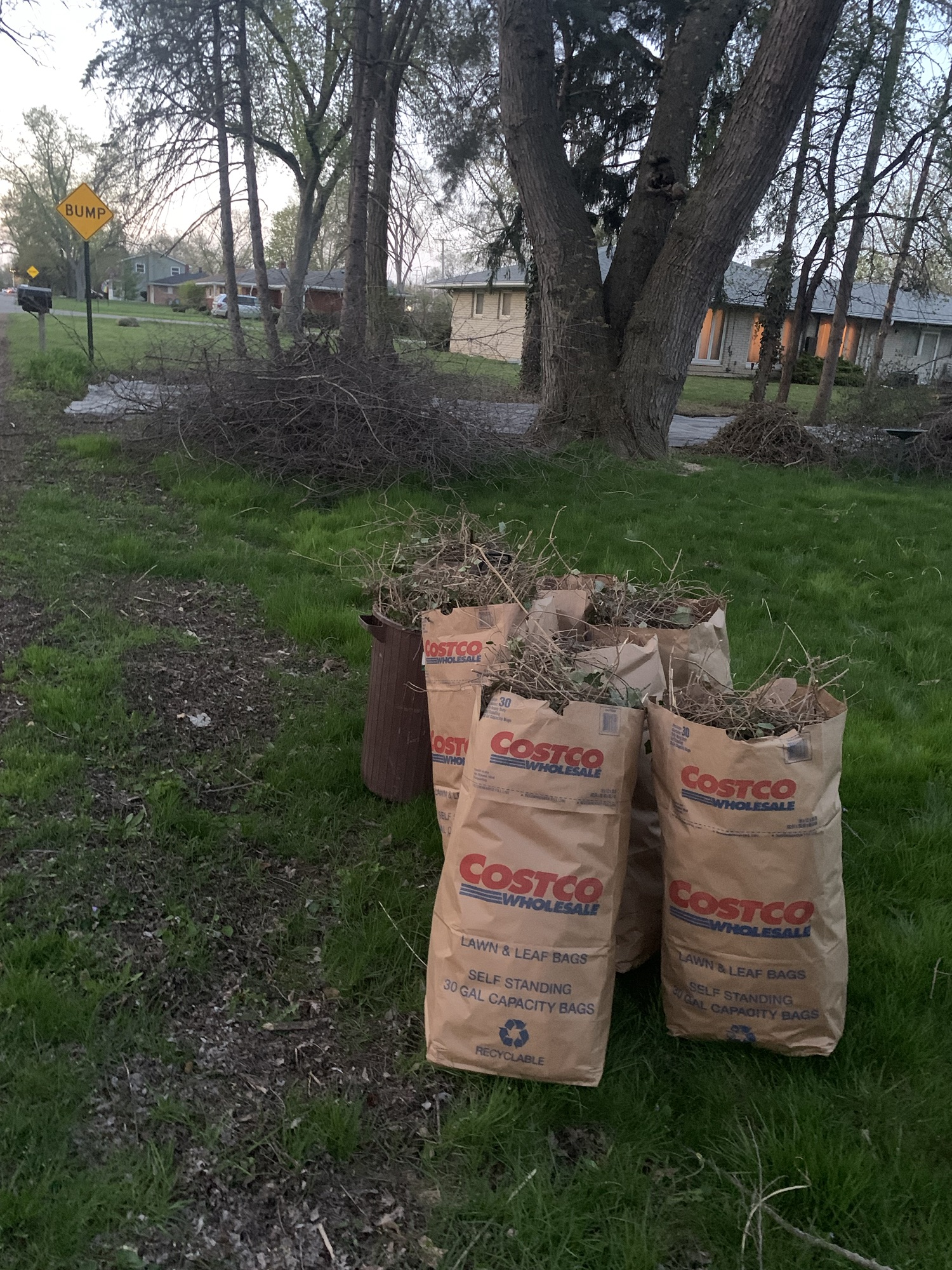
Once I had cleared the front yard space of ivy and other invasives, I laid down landscaping fabric and covered it with woodchips. If I had it to do again, I probably would have used cardboard instead of the fabric, but I was young and ignorant then (two years ago). Cardboard would have decomposed, enriching the soil below and leaving no clean up work. Instead, the next spring I pulled up and threw away the fabric (no easy task). The dirt beneath wasn’t completely lifeless; there were earthworms, ants, and some fungus, but it dried out very quickly.

One thing in the fabric’s favor: it pretty much stopped all the English ivy. Every week or two I pluck a tell-tale dark green leaf, and these quiet whimpers are all that’s left of the monster. I question whether several layers of cardboard would have held up against such tenacious invasives.
English ivy is now eradicated from my yard. There’s a bit that could creep over from my neighbor’s side, but she has given me permission to remove it at will. I don’t believe that any native plants could compete with English ivy, and it is a relief to know I can plant natives without worrying about a British invasion.
 Put It In Your Hat