Oh, Buckthorn. The thorn in my thumb. The bane of my existence. My greatest foe. My constant companion.
Another misguided ornamental, the previous homeowners appear to have planted buckthorn along the north and south edges of the property. What may have been a few intentionally placed trees were, by the summer of 2021, a dense forest lining three sides of my yard.


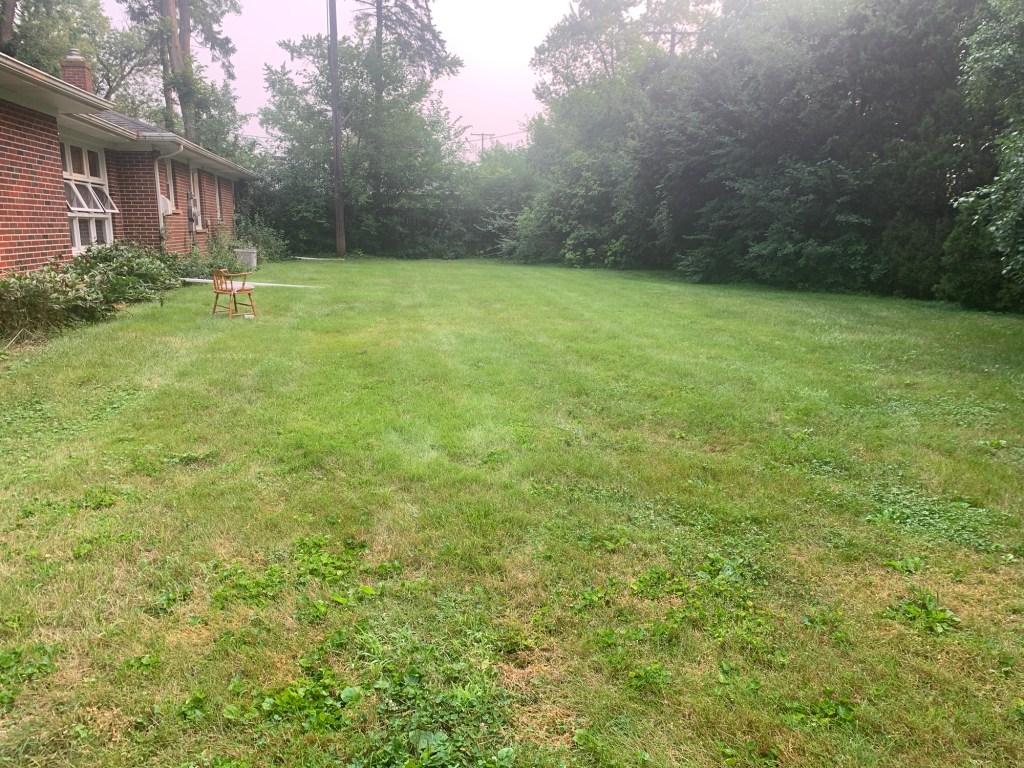
Like the English ivy, I was initially charmed by the benefits of buckthorn. The bordering thickets provided privacy screens on all sides of the property. The leafy green trees seemed attractive as part of a natural landscape. I was sad to learn that these trees were choking all the life out of my yard.
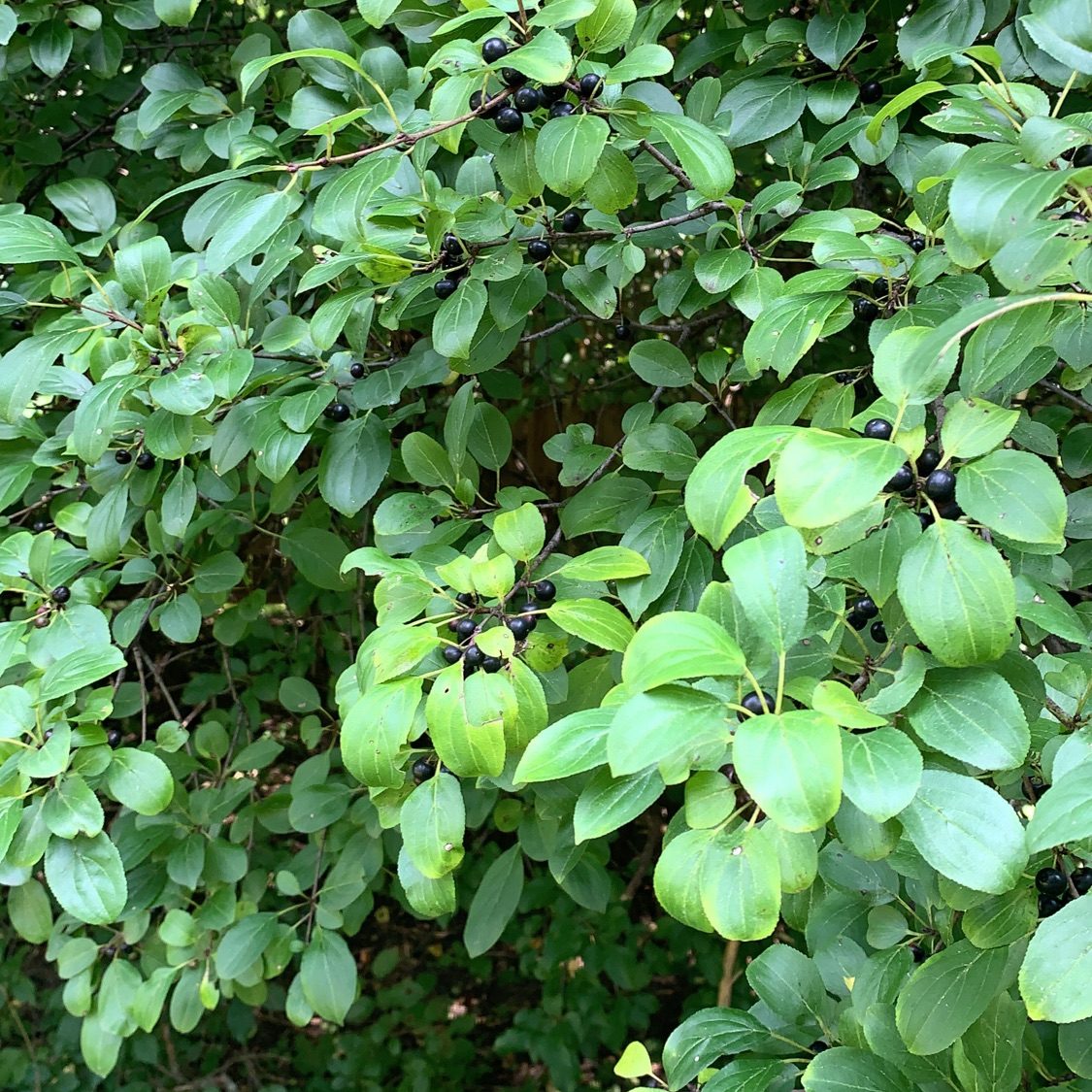
Buckthorn trees are masters of reproduction. They produce thousands of berries that germinate quickly. They can grow in heavy clay or loose woodchips, in complete shade or full sunlight, in muddy or arid conditions. If you cut them down to a stump, new suckers will shoot out as quickly as you snip them off. If you pull out a tree by the roots, dozens of tiny seedlings will take its place. Clear all the seedlings in an area, find another batch of seedlings next week. Native plants take years to reach maturity. They cannot compete with an aggressive seeder using all available resources–land, light, and water–before they even germinate.
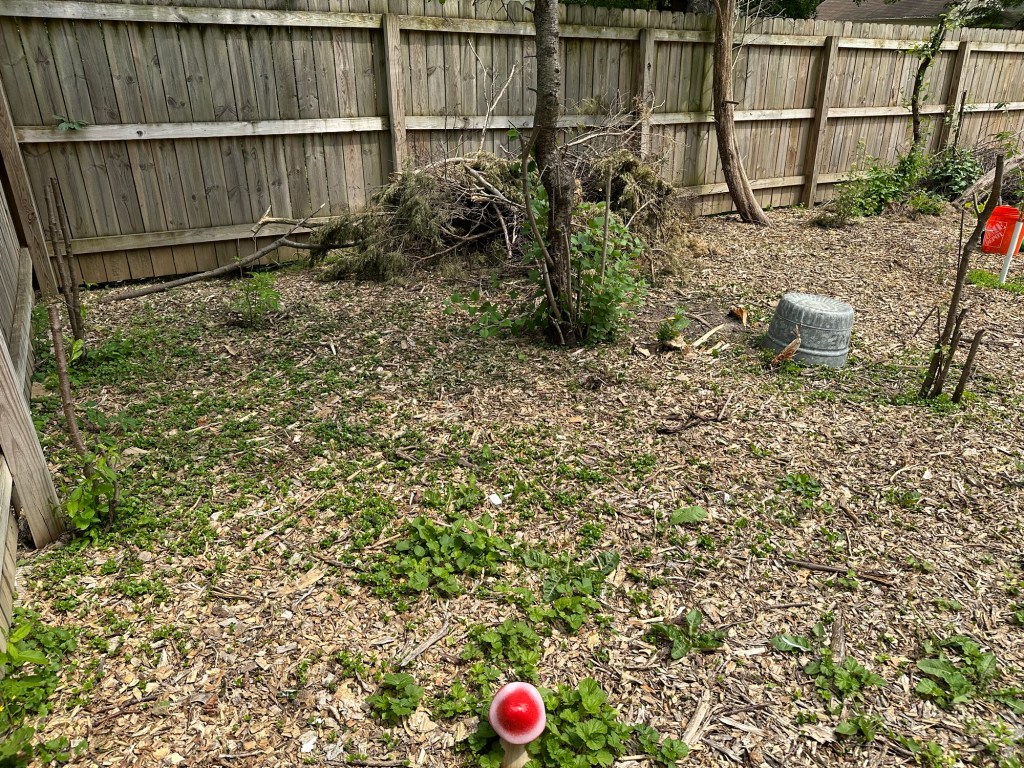
In addition to outcompeting native plants that support native wildlife, buckthorn are bad for surrounding structures. Their roots are shallow but dense, hoarding nutrients for themselves. Native plants with deep roots soak up water and incorporate it into the Earth’s water cycle; buckthorn trees let the water pool and soak into my basement and cost me thousands of dollars in repairs.
And those vigorously germinating berries? They don’t even provide sustenance for wildlife. Buckthorn berries have a laxative effect on birds and other critters, causing illness or death. In fact, the root of its scientific name cathartica is cathartic, meaning purging or cleansing. A jungle of berry-laden buckthorn is essentially a wildlife vomitorium.
Like the Terminator, buckthorn is destructive, incorrigible, and unstoppable. It must be destroyed.
I’ve done my damndest to destroy the living buckthorn, and now only two full trees remain on my property. Both are entangled with power lines, so I have to wait for the power company to work on them. There is a ton of buckthorn on one neighbor’s property line; you can imagine how it irks me. This year I planted dozens of native trees and shrubs on my side of the line. If I can’t kill the buckthorn now, I will (1) impede its spread, (2) block my view of it, and (3) hopefully provide a natural screen that leads my neighbor to ok the buckthorn removal in the future.
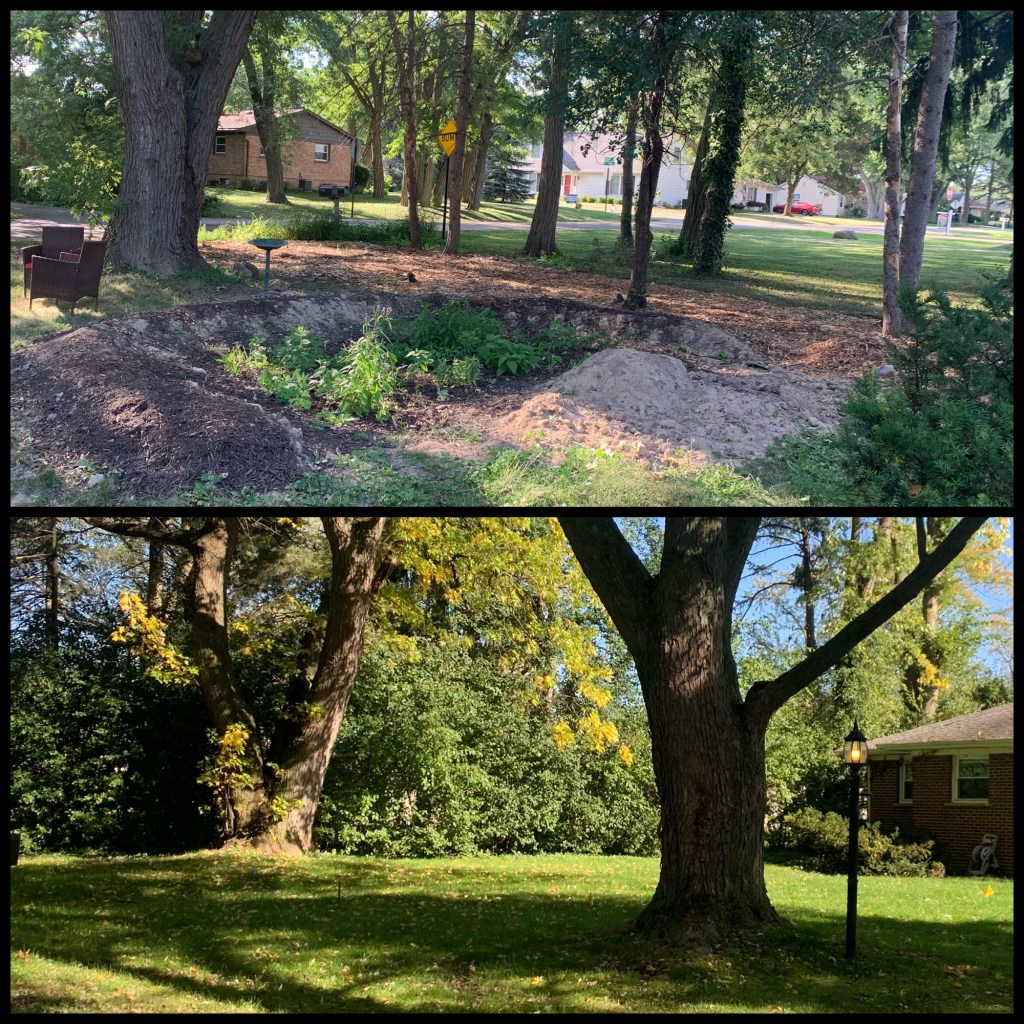
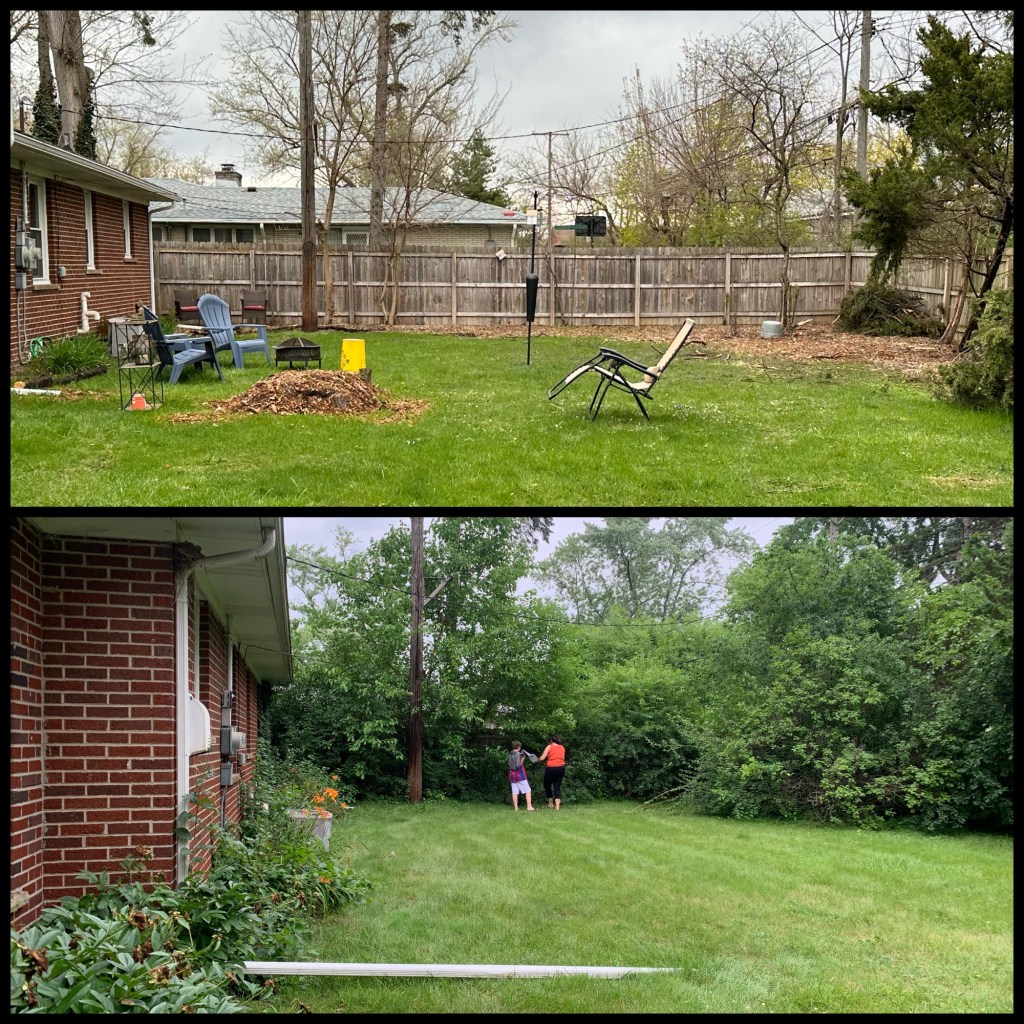
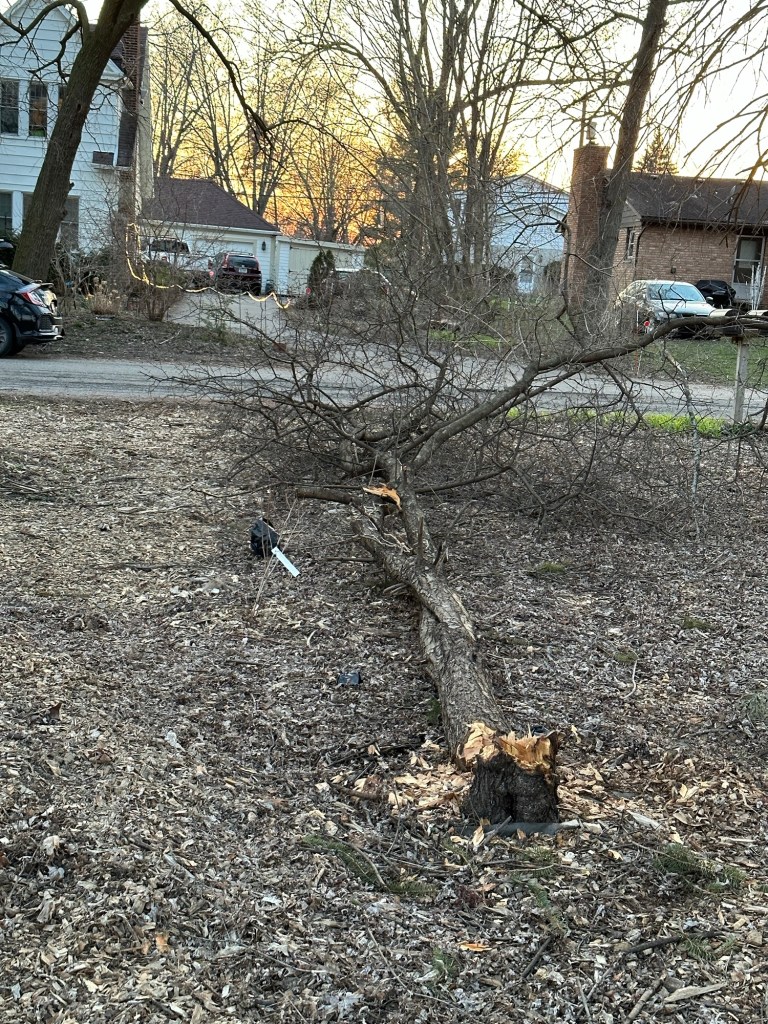
Later I will write about the various tools I’ve used in my fight against buckthorn. For now, the battle carries on quietly, in snipped shoots, pulled seedlings, and muttered curses.
 Put It In Your Hat